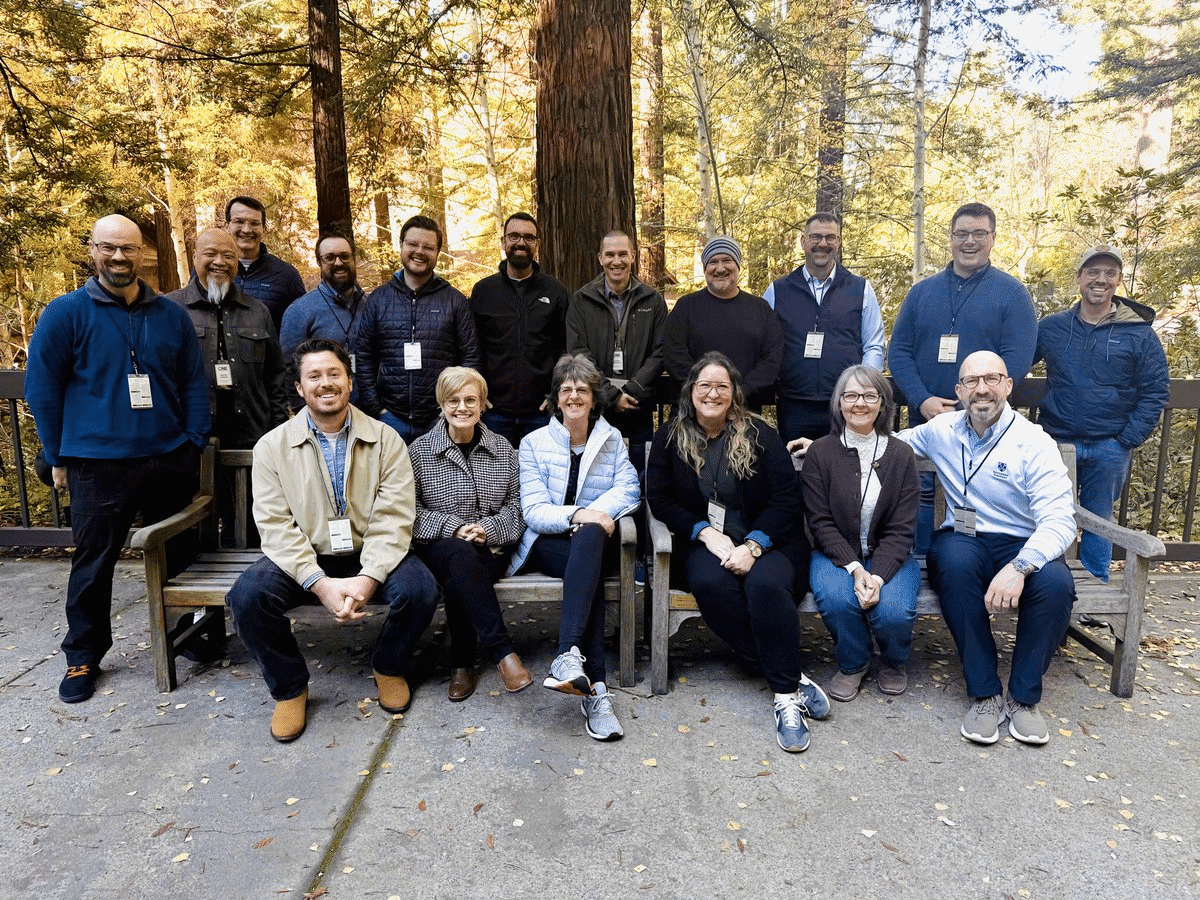
The Biblical Counseling Coalition (BCC) is an organization that cultivates relationships and conversations among the leading institutions within the biblical counseling movement. The BCC hosts regular private annual gatherings for leaders within the movement who comprise the BCC council, but every several years they offer a global summit that is open to the broader movement, including pastors, biblical counselors, and members of local churches. This December, the BCC hosted another global summit titled “One Word, One World.” Joining over a hundred biblical counselors, I had the privilege of spending several days at Mt. Hermon Camp and Conference Center, nestled under the Redwoods several miles from the California coast.
This event was advertised to the public as an opportunity to network and connect with many leaders in the biblical counseling movement, and it lived up to that expectation. Biblical counseling is diverse and interdenominational, and having many different types of biblical counselors in one place was a helpful litmus test for the current state of this movement.
After flying home to Grand Rapids, here are my three major takeaways from the 2025 Biblical Counseling Coalition Global Summit.
The BCC Global Summit demonstrated that Biblical Counselors love Jesus.
Truth be told, I am hesitant to write the previous statement because it sounds quite cheesy and a touch too sentimental. At the same time, it was hard to leave the BCC Summit without acknowledging the undeniable reality that the pastors and counselors of this retreat demonstrated a tangible love for Jesus. I must be honest that my conversations convicted me. It is easy within a regular counseling ministry to focus on the complexity of messy situations, counselees who do not experience the change you desire, and sessions that leave counselors walking away with cuts and bruises. Over time, these situations can have a net negative effect on counselors’ morale, including mine.
I did not enter the week of this summit expecting this experience, but I was challenged and encouraged by how many conversations turned to the Gospel. Faces beamed as they recounted stories of the lives of their counselees radically changed by encountering Jesus. These conversations, combined with the preaching and worship in the plenary sessions, left this attendee with the impression that the biblical counseling movement has not abandoned its first love (See Rev 2:4). Fellowshipping with other leaders helped me to see the beauty of Christ and the Gospel and motivated me to want to know Christ more, an encouraging sign for the current state of the movement.
The BCC Global Summit provided plentiful opportunities for fellowship and networking.
The leadership of the BCC deserves much credit for the decisions that went into organizing this event. It is not uncommon for conference attendees to leave tired from events with little margin between content-heavy sessions. The BCC avoided this trap by incorporating plenty of downtime for rest and organic interactions. The summit was set up to serve its attendees, with optional sessions, long lunches, and even an encouragement from the front to take a nap, if needed. While walking around the campground, one would see groups walking, sitting around campfires, and enjoying conversations with one another.
It is quite rare to have the opportunity to interact with many different leaders and organizations within the biblical counseling movement at one time, and I found myself moving from rewarding conversation to rewarding conversation. The summit offered the opportunity to reconnect with old friends and meet people whose work I had encountered online or in print. From stimulating discussions on theology and counseling theory and practice to a relaxed conversation while walking through the Henry Cowell Redwoods State Park with centuries-old sequoias, the price of travel and admission to the BCC Summit were well worth the rich conversations I enjoyed over the several days at Mount Hermon.
The BCC Global Summit reflected the reality that there is work to be done within the biblical counseling movement.
Although I enjoyed my time at the BCC Summit, there were moments when the feeling in the room was not positive. Multiple moments reminded me that, despite the great conversations and fellowship, all is not well within the biblical counseling movement. The feeling was akin to a family dinner with empty seats or an exhibition hall with major biblical counseling organizations absent. An attendee would reference a post from earlier in the day attacking another leader within the movement. A pastor would share a story of an online article having real-life consequences for himself and his ministry—a pastor leaving a church, his family leaving a home, and a counseling ministry without a leader—all casualties in our current biblical counseling wars.
Disagreements abound, and tweets fly aplenty as debates continue over the nature and direction of the biblical counseling movement, and there are real issues our movement and its leaders must address. No, I did not agree with everything that I heard at the BCC Summit. Yes, there were moments when I was uncomfortable with comments and ideas shared in conversations. At the same time, there is another danger aside from doctrinal drift confronting the biblical counseling movement, and that is the threat of disengagement.
Unless the unfolding of God’s providence suddenly changes, a church council or ecclesiastical declaration is not going to decide the victors and vanquished within our debates over the sufficiency of Scripture, common grace, and who is worthy of calling themselves a biblical counselor. Two strategies are currently playing out concerning how to respond to this conflict. First, we are seeing online, in print, and institutional maneuvering something akin to a top-down, heavy-handed form of cancel culture. Others are calling for a more relationship-based approach to principled engagement and debate over these important theological issues.
Sadly, it does not take long for the former approach to poison the environment that fosters the latter. While some parties may grow more content as their friend groups and institutions demonstrate greater conformity to their personal convictions, the overall health of the movement suffers since—to put it simply—people will eventually grow too tired, tune out the noise, and disengage from the broader conversation. But this approach only achieves the appearance of a more unified “biblical counseling” movement, since it inevitably feeds the growing balkanization within the movement, as people define their theory and practice of biblical counseling in isolation from one another. I personally know practicing biblical counselors who would benefit from guidance and direction if the public conversation was at a lower temperature.
Conclusion
For these reasons, I am thankful for the Biblical Counseling Coalition. The BCC exists to foster camaraderie and conversation across the spectrum of biblical counseling, and I have a hard time imagining a future of greater unity within the movement in which the BCC does not play an instrumental role. I thank God for the leadership of Curtis Solomon, who has led the BCC in tumultuous times, and I pray for Kevin Carson as he begins his tenure as Executive Director of the BCC in January 2026.
The 2025 BCC Global Summit gave me a picture of what the biblical counseling movement could be—a passion for Christ and his Word, rich and stimulating discussion and dialogue, and a foretaste of the new heavens and new earth in a global counseling movement in our one World, united around the life-transforming power of the one Word.
Let us pray and strive to that end.