
On November 14-16, 1995, representatives from 42 Reformed churches gathered at Lynwood Independent Reformed Church (Lynwood, Illinois) to discuss an important and monumental proposal—the beginning of a new ecclesiastical federation. For several decades, the largest Dutch Reformed denomination in America, the Christian Reformed Church in North America (CRC), exhibited signs of theological and moral drift in areas such as women’s ordination and the interpretation of Genesis. As many conservative congregations departed the CRC, they longed for a new home, unashamedly Reformed as understood in the Dutch Reformed tradition and summarized in the Three Forms of Unity—the Heidelberg Catechism, the Belgic Confession, and the Canons of Dort. The records of this initial meeting summarize the intent of those gathered in the following quote:
Our Covenant and Resolve
We as delegates from the independent churches associated with the Alliance of Reformed Churches meeting in Lynwood, Illinois, on November 14-16, 1995, decided by an overwhelming vote to establish a new federation of churches, temporarily named Fellowship of Uniting Reformed Churches. This action was taken in the firm belief that it was done in obedience to God’s inspired, infallible and inerrant Word, and in full agreement with the Three Forms of Unity, namely, the Heidelberg Catechism, the Belgic Confession and the Canons of Dort.
As a result of the unity and fraternal spirit of this gathering, the United Reformed Churches in North America (URCNA) was born in 1995.
The URCNA is a federation of Reformed churches geographically located in North America and Canada. The URCNA is a federation, not a denomination. A defining feature of continental Reformed polity, each congregation is independent, with Christ as the head of every congregation and exercising his authority through a board of elders and pastors known as the Consistory. The fraternal relations between the various churches are not part of the essence of the church, but support the well-being of each congregation, as each local church voluntarily enters this federation that shares a common confession—the Three Forms of Unity—and a common church order.
The Institute for Reformed Biblical Counseling (IRBC) has a unique relationship with the URCNA. IRBC began in a URCNA church in 2007 and has a large footprint among the Dutch Reformed. To this day, IRBC is under the spiritual oversight of a URCNA congregation, Cornerstone URC (Hudsonville, Michigan). For this reason, we are happy to recommend a recent work to the broader Reformed world and the biblical counseling movement as an introduction to URCNA polity: Decently and In Order: A Practical Commentary on the URCNA Church Order.
As an interdenominational movement, it is easy for biblical counselors to overlook the importance of church polity. Polity inevitably draws attention to differences—and therefore, possible disunity—to those who regularly partner for encouragement and equipping in biblical counseling. Despite differences among the various denominations represented in the biblical counseling movement—Baptists, Presbyterians, Dutch Reformed, Calvary Chapel, and more—all biblical counselors should take the words of the Apostle Paul in 1 Corinthians 14:40 seriously. Everything in the church must be done “decently and in order.” The Scriptures provide the church with principles that govern its purpose, structure, offices, and functions. Christians may debate these exact principles, but they must agree that a disorganized church will undermine the efficacy of the various ministries within that congregation—including biblical counseling. Complex counseling and pastoral care cases stress even the healthiest churches. For churches that ignore these biblical principles, failing to operate according to their church order and lacking qualified church officers, these cases cripple and expose them.
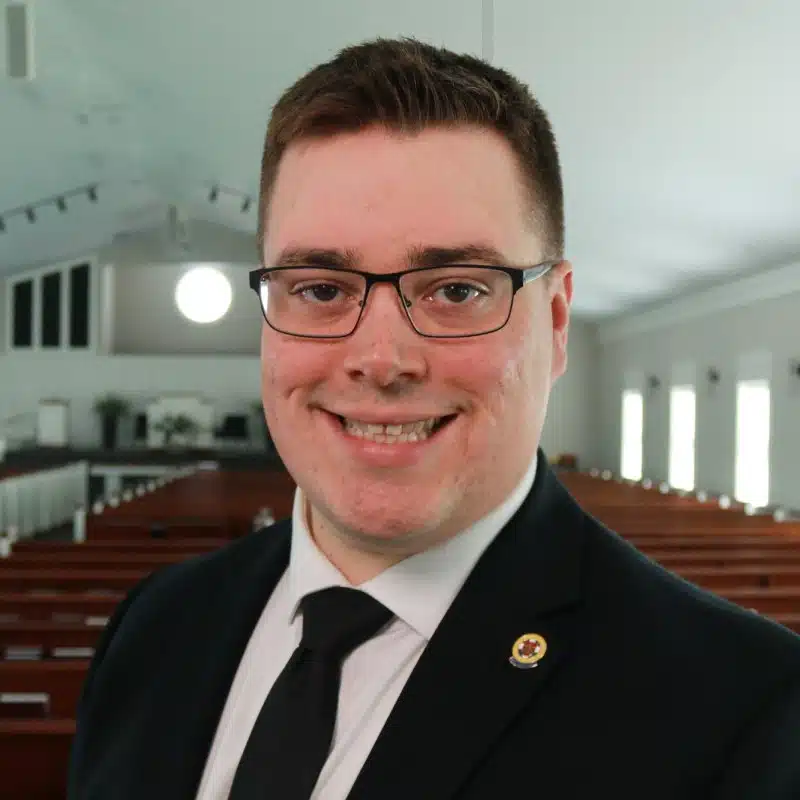
Decently and In Order is a positive sign for those tracking the URCNA’s growth and health. Younger ecclesiastical bodies often struggle from a lack of resources to explain and clarify the church’s foundational documents for elders, laypersons, and prospective ministry candidates. In this regard, Bradd Nymeyer is the perfect candidate to produce the URCNA’s first Church Order commentary. In addition to his role as Senior Pastor of First United Reformed Church of Chino, California, Nymeyer has served for eight years as classical clerk of URCNA Classis Southwest U.S., six years as stated clerk of the federation, and chaired five URCNA synods. In a sense, this Church Order commentary is a love letter to the federation he has served for many years, that her churches may be strengthened and her leaders equipped with the proper knowledge of the contents and practice of the URNCA Church Order. Rev. Ronald Scheuers is correct in his assessment of Nymeyer’s fitness to offer such a contribution to the URCNA, “Having exercised his responsibilities with such great success over the years proves that Rev. Nymeyer has both an expansive knowledge of the Church Order and a firm grasp of how it should function in the life of the church.”
The URCNA Church Order is comprised of sixty-six Articles and eight appendices. It is not a cumbersome work—printable on eleven single-spaced pages. Its contents are to the point without drowning in qualifications and endless possible circumstances. The Church Order is divided into four sections: Ecclesiastical Offices (Articles 1–15), Ecclesiastical Assemblies (Articles 16–36), Ecclesiastical Functions and Tasks (Articles 37–50), and Ecclesiastical Discipline (Articles 51–66). Nymeyer’s commentary offers extended commentary on each article, following in the tradition of Idzerd Van Dellen and Martin Monsma’s monumental commentary on the CRC’s Church Order in sharing otherwise unknown historical context and theological insights that are essential for a proper interpretation and implementation of each section. Because of the potential long-term influence of such a work, this reader appreciates Nymeyer’s sensitivity in presenting an objective interpretation of each article before offering his personal opinions. Nymeyer does not play politics by skewing the church order in his favor, clearly outlining the differences between “the church order says” and “I think.”
Due to the nature of this volume, it immediately rises to the level of “required reading” for all pastors, elders, and even church members within the URCNA. Every consistory should have a copy on hand as it seeks to interpret and apply its shared Church Order. Although many outside the URCNA may pass this volume, this book is a well-received reminder of the importance of church polity for every true and healthy church. All Christians—including biblical counselors—should strive so that all things within the church are done “decently and in order” (1 Cor 14:40).
Bradd L. Nymeyer. Decently and In Order: A Practical Commentary on the URCNA Church Order. Grandville, MI: Reformed Fellowship, 2025.